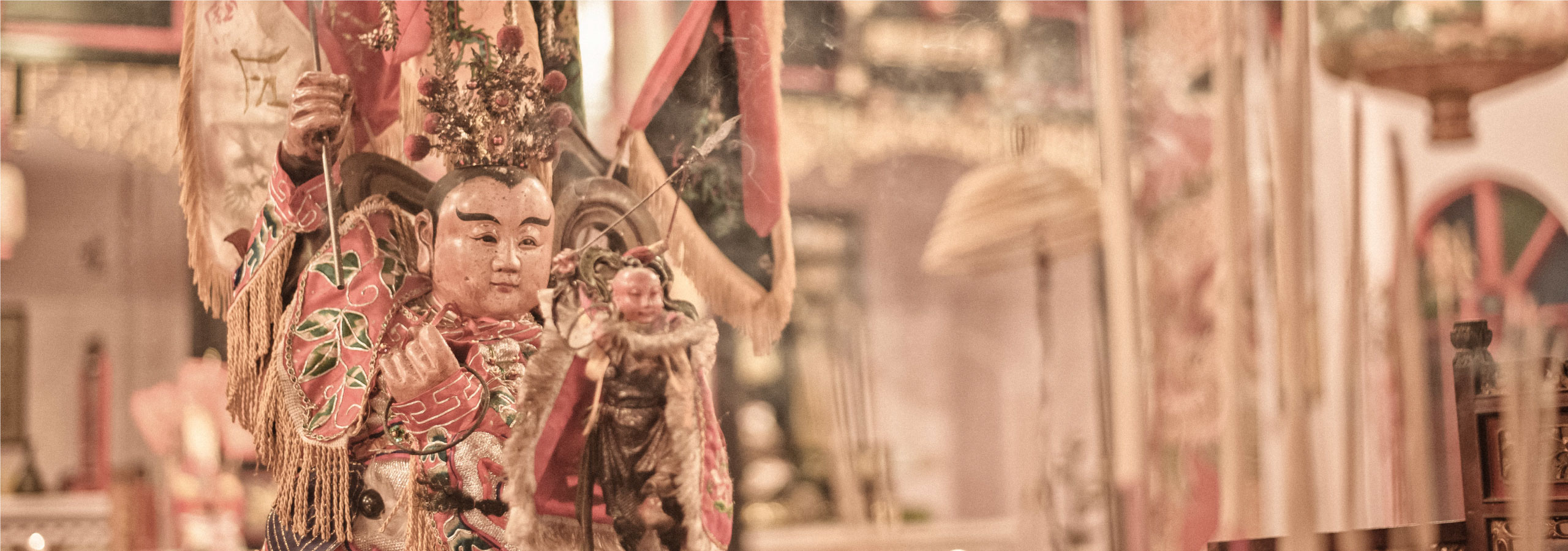
哪吒的记载最早起源于佛教,其原型可能来自古印度或中亚波斯一带的神话。
在佛教经典中,他被称为那罗鸠婆(梵文:नालकुबेर,Nalakuvara),为毗沙门天之子,在其他经典中又译为那吒矩钵罗、那吒俱伐罗等,随后被简化为“那吒”。那吒是毗沙门天王与吉祥天女的第三子,常随毗沙门天身边,为护法军神;亦有传说认为他是毗沙门天之孙。毗沙门天本身源自印度俱毗罗神,为梵天之孙、夜叉之王。
宋代《太平广记》中记载了那吒护卫僧人与献佛牙的故事,日本僧人圆仁的随笔中也记载了此事。禅宗文献中亦出现了那吒“析骨还父,析肉还母”,后以莲花化身重生的传说,这表明那吒的故事在宋代已在中国民间广泛流传。
在宋朝时期,那吒也正式成为道教的护法神之一,《夷坚志》中便记载了茅山道士以“那吒火球咒”击退石精的故事。
元代建设大都(今北京)筑城时,按《周礼》规定四面应各有三道城门,但大都北面独有二门。民间相传这是因为大都城采用了哪吒“三头六臂两足”的造型(此造型源自印度湿婆神的分身),因此元大都又被称为“哪吒城”。
及至明代,道教神格志书《三教源流搜神大全》正式将哪吒列为道教神明。
【道教与民间传说】
在明清神话(如《封神演义》)中,哪吒被描写为殷商末年陈塘关总兵李靖的第三个儿子,是金吒、木吒的弟弟,其前身为天界灵珠子投胎。其母怀孕三年六个月,最终诞下一个肉球。李靖以为是妖怪,便用宝剑劈开,里面的婴儿正是哪吒。后来,乾元山金光洞的仙人太乙真人收他为徒。一次,哪吒三太子在东海玩水,与东海龙王的三太子敖丙发生冲突,哪吒不但将其打死,还抽了龙筋做为腰带准备送给李靖。
龙王得知后到陈塘关兴师问罪,水淹陈塘关。为了不连累父母,哪吒三太子当场自戕,“割肉还母、剔骨还父”。死后,哪吒三太子托梦建立庙宇,试图汲取人间香火复活,却被其父李靖阻挠并捣毁神像。最终,太乙真人用莲花与莲藕为其重塑了一具新的肉身。
重生后的哪吒跟随姜太公(姜子牙),协助周武王克殷伐纣。哪吒凭着高强的武功和太乙真人所赐的法宝(风火轮、乾坤圈、混天绫、火尖枪等)多次立下奇功。更因为他是莲花清净化身,因而免疫世间的各种瘟疫毒害与魂魄法术。
在众多民间故事中,其父李靖被称为“托塔李天王”,哪吒则被尊称为“哪吒三太子”。因为他法力高强,成为了玉皇大帝麾下的主要核心将领,统帅五营神兵。
哪吒在道教中的正式头衔包括:太子元帅、中坛元帅、通天太师、威灵显赫大将军、三坛海会大神等,民间则亲切地尊称为太子爷、三太子。
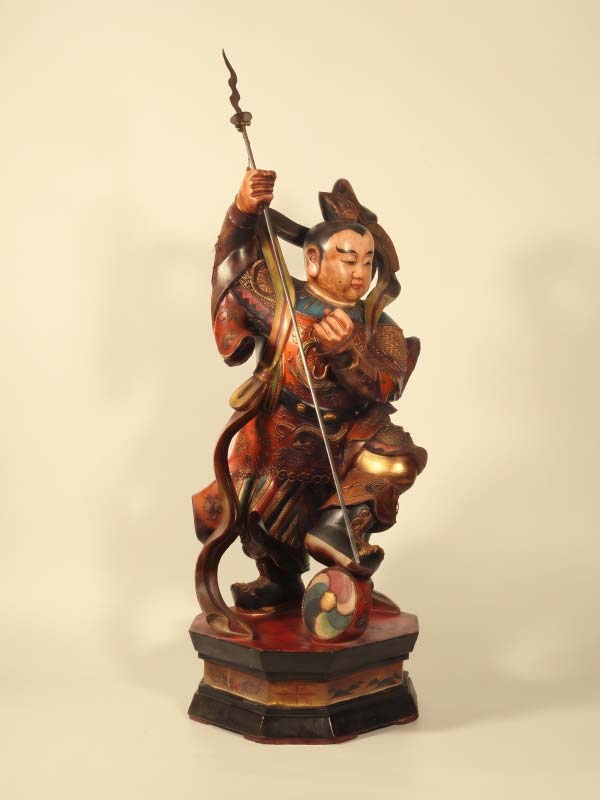
【哪吒 – 中坛元帅, Nézhā Zhōng Tán Yuán Shuài】
The earliest records of Nezha (哪吒) originated from Buddhism (佛教), and his prototype likely derived from myths of ancient India (古印度) or the Persian (波斯) region of Central Asia.
In Buddhist scriptures, he was known as Nalakubara (那罗鸠婆) (Sanskrit: नालकुबेर), the son of Vaisravana (毗沙门天). In other sutras, his name was translated as Nazhaju poluoy (那吒矩钵罗) or Nazhaju faluo (那吒俱伐罗), which was later simplified to “Nazha” (那吒). Nazha (那吒) is the third son of Heavenly King Vaisravana (毗沙门天王) and the Goddess Laksmi (吉祥天女). He constantly accompanied Vaisravana (毗沙门天) as a divine guardian military deity (护法军神); some legends also consider him Vaisravana’s (毗沙门天) grandson. Vaisravana (毗沙门天) himself originated from the Indian deity Kubera (俱毗罗), who was the grandson of Brahma (梵天) and the King of the Yakshas (夜叉之王).
During the Song Dynasty (宋代), the Extensive Records of the Taiping Era (《太平广记》) recorded a story of Nazha (那吒) guarding a Buddhist monk and offering a Buddha relic (佛牙), an event also documented by the Japanese monk Ennin (圆仁) in his travelogues. Zen Buddhism (禅宗) texts also feature the legend of Nazha (那吒) returning his flesh and bones to his parents and reshaping his body through a lotus flower (莲花化身), indicating that Nazha’s (那吒) legend was already widely circulated among the Chinese populace during the Song Dynasty (宋代).
Also in the Song Dynasty (宋朝), Nazha (那吒) officially became one of the guardian deities of Daoism (道教护法神). The Records of the Yi Jian (《夷坚志》) details a account where a Maoshan Daoist priest (茅山道士) utilized the “Nazha Fireball Incantation” (那吒火球咒) to repel a stone spirit.
During the Yuan Dynasty (元代), when the capital Dadu (大都) (modern-day Beijing (北京)) was constructed, the classic text Rites of Zhou (《周礼》) dictated that each of the four sides of the city should have three gates. However, the northern side of Dadu (大都) possessed only two gates. Popular legends attribute this to the city design mimicking Nezha’s (哪吒) form of “three heads, six arms, and two feet” (三头六臂两足) (a form derived from the Indian deity Shiva (湿婆)), which led to Dadu (大都) being colloquially dubbed “Nezha City” (哪吒城).
By the Ming Dynasty (明代), the Daoist hagiography The Comprehensive Compendium of the Origins of the Deities of the Three Religions (《三教源流搜神大全》) officially cataloged Nezha (哪吒) as a mainstream Daoist deity (道教神明).
【Daoist and Folk Legends】
In myths from the Ming (明) and Qing (清) dynasties (such as The Investiture of the Gods (《封神演义》)), Nezha (哪吒) was depicted as the third son of Li Jing (李靖), the Grand Commander of Chentang Pass (陈塘关总兵) at the end of the Shang Dynasty (商朝末年), and the younger brother of Jinzha (金吒) and Muzha (木吒). His past life was the divine Lingzhuzi (灵珠子, Spirit Pearl) reincarnated into the mortal world. His mother was pregnant for three years and six months before giving birth to a ball of flesh (肉球). Believing it to be a demon, Li Jing (李靖) slashed it open with his sword, revealing the infant Nezha (哪吒) inside. Later, the immortal Taiyi Zhenren (太乙真人) of Jinguang Cave on Mount Qianyuan (乾元山金光洞) accepted him as a disciple. One day, the Third Prince Nezha (哪吒三太子) was playing in the waters of the East Sea (东海) and clashed with Ao Bing (敖丙), the third son of the East Sea Dragon King (东海龙王). Nezha (哪吒) not only slew him but also ripped out the dragon’s tendons (抽龙筋) to make a belt as a gift for Li Jing (李靖).
Upon learning of this, the Dragon King went to Chentang Pass (陈塘关) to demand justice and flooded the town. To avoid bringing disaster upon his parents, Third Prince Nezha (哪吒三太子) committed suicide on the spot, “cutting his flesh for his mother and carving his bones for his father” (割肉还母、剔骨还父). After his death, Nezha (哪吒) appeared in a dream requesting the construction of a temple to absorb mortal incense (人间香火) for his resurrection, but his father Li Jing (李靖) intervened and destroyed the divine statue. Ultimately, Taiyi Zhenren (太乙真人) used lotus flowers and lotus roots (莲花与莲藕) to reconstruct a brand new physical body for Nezha (哪吒).
The reborn Nezha (哪吒) followed Jiang Taigong (姜太公) to assist King Wu of Zhou (周武王) in overthrowing the Shang Dynasty (克殷). Nezha (哪吒) achieved numerous extraordinary feats utilizing his exceptional martial arts and divine treasures bestowed by his master, including the Wind-Fire Wheels (风火轮), the Universe Ring (乾坤圈), and the Red Sky-Mantle (混天绫). Furthermore, because he was the pure incarnation of a lotus flower (莲花化身), he was uniquely immune to earthly plagues, poisons, and soul-capturing sorcery.
In many folk stories, his father Li Jing (李靖) is referred to as the “Pagoda-Bearing Heavenly King Li” (托塔李天王), while Nezha (哪吒) is revered as the Third Prince Nezha (哪吒三太子). Due to his immense magical powers, he became a core general under the Jade Emperor (玉皇大帝), commanding the Divine Soldiers of the Five Camps (五营神兵).
His official titles within Daoism (道教) include Prince Marshal (太子元帅), Marshal of the Central Altar (中坛元帅), Grand Master of Heaven (通天太师), General of Mighty and Illustrious Spiritual Splendor (威灵显赫大将军), and Great Deity of the Tri-Altar Maritime Assembly (三坛海会大神). Commoners affectionately revere him as Prince Ye (太子爷) or the Third Prince (三太子).