【圣号与源流】
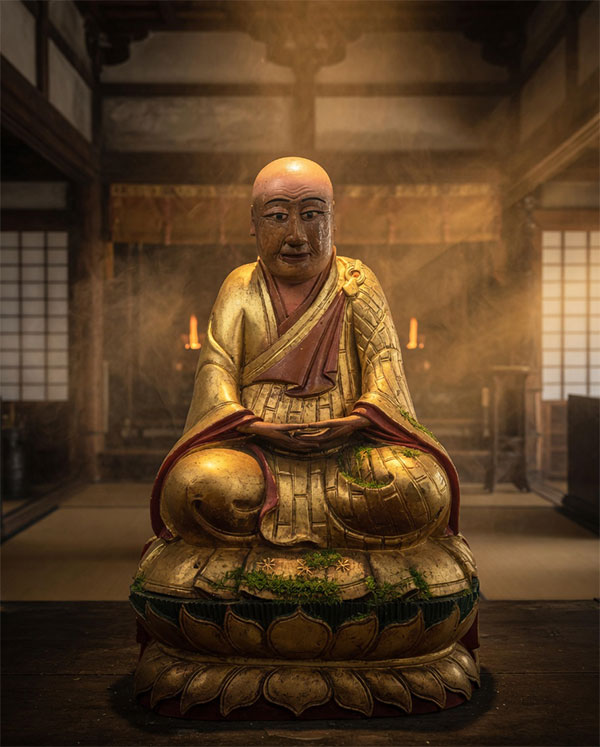
三代祖师,原为南宋高僧林珌(公元1164—1203年),福建永春人。 因其在家乡毗连的德化县美湖镇、龙浔镇一带广施教化,并在当地十三乡(由李、林、陈、苏等十三姓氏组成)治病救人、德泽深远,被十三乡信众奉为至高无上的守护神。 因其历经三世修持、功德圆满,民间感念其恩德,尊称为“三代祖师”或“显应祖师公”。
【坐镇龙津,守护十三姓】
相传祖师在德化期间,曾驻锡于太华山龙津寺,筚路蓝缕开辟道场。他不仅精通禅理,更具备神医妙手,常以大慈悲心深入民间,为因瘴气、疫病受苦的贫苦百姓化解灾厄。 祖师不仅守护着家乡的农耕岁收,更在早期闽南先贤(尤其是十三姓氏先辈)下南洋开垦拓荒时,成为他们横渡黑水沟、在马六甲扎根的精神支柱。
宋宁宗嘉泰三年(公元1203年)农历十二月初四日,祖师于太华山圆寂,享寿三十九岁。其多年来在保安宫的香火,始终凝聚着华人社群的地缘与血缘认同。
【Sacred Title and Origin】
The San Dai Cho-su kong (Three-generation Patriarch) was originally the eminent monk Lin Bi (1164–1203 CE) of the Southern Song dynasty, a native of Yongchun, Fujian. He dedicated his life to spreading the Dharma in the neighboring towns of Meihu and Longxun in Dehua County. There he healed the sick and extended his benevolence among the “Thirteen Villages,” a community formed by the Li, Lin, Chen, Su, and other clans. In gratitude for his compassion and virtue, the people revered him as their supreme guardian deity. Because he cultivated the Dharma across three lifetimes and attained complete merit, he was honored as the “San Dai Cho-su kong (Three-generation Patriarch)” or “Patriarch Xianying.”
【Guardian of the Thirteen Clans at Longjin】
During his time in Dehua, the Master resided at the Longjin Temple on Mount Taihua, pioneering a sacred sanctuary through years of hardship. Profoundly versed in Chan (Zen) principles and blessed with miraculous healing skills, he ventured deep into rural settlements to cure vulnerable villagers suffering from plague and miasma. The Master not only blessed the agricultural harvests of his homeland but also became the ultimate spiritual anchor for early Fujian pioneers (particularly those of the thirteen original surnames) as they braved the perilous voyages southward to plant their roots in Malacca.
On the 4th day of the 12th Lunar Month in 1203 AD, (in the third year of Emperor Ninzong’s Jiatai reign) the Master entered parinirvana on Mount Taihua at the young age of 39. For over Over the years, his continuous incense at Poh Onn Kong has stood as a powerful symbol of unity, connecting the ancestral heritage and kinship of the Chinese diaspora.