【圣号与源流】
清水祖师,原为北宋高僧陈昭应(公元1047—1101年),福建永春人。 幼年出家隐居大静山,后舍化至安溪县蓬莱山清水岩修道,因岩下泉水清冽,故人称“清水祖师”,闽南信众亦亲切尊称为“祖师公”。 宋代朝廷因其屡显神迹,曾先后四次敕封,赐谥号“昭应广惠慈济善利大师”。
【施医济物,祈雨护国】
祖师一生慈悲为怀,不仅精通佛法,更是卓越的草药医生。他常年往来于闽南崇山峻岭间,施医赠药、救治贫病,并积极带领民众筑桥铺路、造福乡里。 相传闽南一带屡逢大旱,祖师每次设坛祈雨皆灵验显赫,使大地普降甘霖,因而被百姓奉为旱灾与民生的守护神。
【麻章显圣,金身黑面】
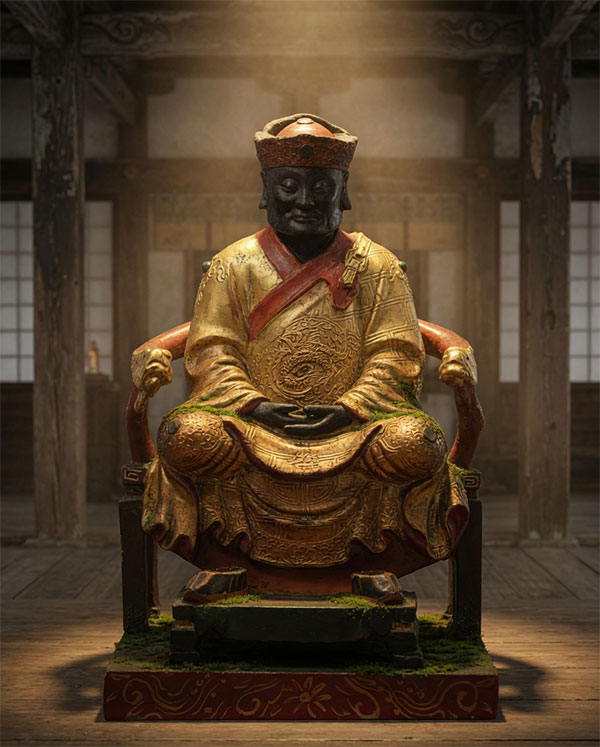
关于祖师圣像呈现“黑面”(乌面祖师),民间流传着他曾在清水岩遭遇鬼怪火烧七日七夜,却端坐合十、毫发无损,仅面部被熏黑的神话。这代表着祖师以无边佛法降伏妖魔、转危为安的无畏精神。
宋徽宗建中靖国元年(公元1101年)五月十三日,祖师圆寂,享寿五十五岁。当年聖誕游行与诞辰庆典,在马六甲华社与峇峇家族中蔚为盛事。
【Sacred Title and Origin】
Qingshui Chu Su-kong (Patriarch) was originally Chen Zhaoying (1047–1101 AD), a revered Buddhist monk of the Northern Song Dynasty from Yongchun, Fujian. He entered monastic life as a child, first dwelling in seclusion at Mount Dajing, later moved to the Qingshui (Clear Water) Crag on Mount Penglai in Anxi County to cultivate his practice. Inspired by the crystal-clear spring water beneath the crag, the people reverently named him ” Qing Shui Chu Su-kong (Master Qingshui)(The Clear Water Grandmaster). In recognition of his countless divine miracles, the Song imperial court conferred imperial titles on four occasions, bestowing the honorific “Grand Master Zhaoying”.
【Healing the Sick and Bringing Rain】
Filled with infinite compassion, the Master was not only a profound Buddhist teacher but also an exceptional herbal physician. He traveled through the rugged mountains of southern Fujian to distribute medicine and treat the poor. According to historical accounts, whenever Southern Fujian suffered from severe droughts, the Master’s prayers for rain were unfailingly answered, bringing life-saving rainfall to the parched earth. Thus, he became venerated as a divine protector against natural disasters.
【The Legend of the Black Face】
Folk tradition explains why the Master’s sacred image is depicted with a blackened face (dark-faced Master). It is said that at Qingshui Rock he was once trapped and burned by demons in a cave for seven days and seven nights. Yet, he sat in serene meditation, completely unharmed, with only his face blackened by the soot—a powerful symbol of his fearless spirit, subduing evil through Dharma and transforming peril into safety.
On May 13, 1101 CE, during the first year of Emperor Huizong’s Jianzhong Jingguo reign, the Patriarch entered nirvana at the age of fifty five. His sacred birthday processions and commemorative celebrations became major events among the Chinese community and Baba families in Malacca.