续千载闽南遗风,化百家福米慈航——保安宫“乞龟”民俗始末
【灵龟纳福 · 缘起祖庙】
自古以来,“龟”便被视为祥瑞、长寿与灵异的象征。《礼记·礼运》有载:“麟凤龟龙,谓之四灵。”其中麟、凤、龙皆为神话图腾,唯有灵龟真实存在于人间,承载着长寿安康的期盼。
二零一七年六月一日,保安宫理事会奉座主三坪祖师圣令,远赴中国漳州千年古刹三平寺恭请祖师护法与香火回宫。期间,祖师扶鸾下令,嘱托本宫制作“乞龟”供善信“摸龟增运”。彼时,大德信众与本地道长对此皆感陌生,一头雾水。经多方翻阅典籍考证,方才揭开这一段尘封的闽南古老民俗。
【何谓乞龟 · 传统遗存】
“乞龟”是流行于中国福建泉州及台湾澎湖地区的传统元宵民俗。闽南先民崇拜灵龟由来已久,此俗最早起源于泉州,十八世纪传入澎湖并被发扬光大。信众通过向神明掷筊,乞求由大米或糕点堆叠而成的“米龟”(又称龟粿)带回家中,以祈求全家平安、子嗣绵延。待来年心愿达成、事业得意,信众则需准备加重的米龟还愿,供其他信徒继续求乞,薪火相传。
【广济众生 · 利他义举】
然而,保安宫的“乞龟”在遵循古礼的同时,更蕴含了祖师独特的慈悲智慧。 祖师圣示:“聚百家米,以纳百家福。” 保安宫将传统“乞龟”祈求自身平安的利己行为,升华为将福米赈济贫户、孤儿院及弱势群体的利他社会救助。点米成愿,施米者功德无量,受惠者平安纳福。这一创举,用行动真正践行了三坪祖师“广济众生”的创派宗旨。
【点睛纳福 · 摸龟口诀】
每年农历六月初一,保安宫都会为米龟举行庄严的“点睛仪式”,宣告乞龟盛会正式启幕。点过眼的米龟仿佛睁开熟睡的双眼,带着天地灵气为抚摸者祈福。 坊间流传着朗朗上口的摸龟开运口诀:
“摸头风生水起,摸脚步步高升,摸壳长命百岁,如鱼得水圆满。”
【全马首创 · 善缘广结】
首届盛会一经推出,短短两周内便轰动海内外,共获得来自马来西亚各州、东马、中国、香港及印尼等三千多余名善信的随喜施米,共筹获一万多余斤福米。由本宫同仁闭关一星期合力筑成的巨型米龟,不仅是马六甲庙宇的创举,相信亦是全马第一头慈善巨型米龟。
当年,慕名前来“摸龟”的善信突破五千人次;至农历六月初六祖师圣诞“送龟”之日,齐聚接福米的善信亦达千人。盛会落幕后,万斤福米悉数分发至各大孤儿院、残障中心、老人院及慈善机构。一缕青烟,万袋福米,保安宫让千年的古老民俗,在马六甲河畔绽放出最慈悲的现代光芒。
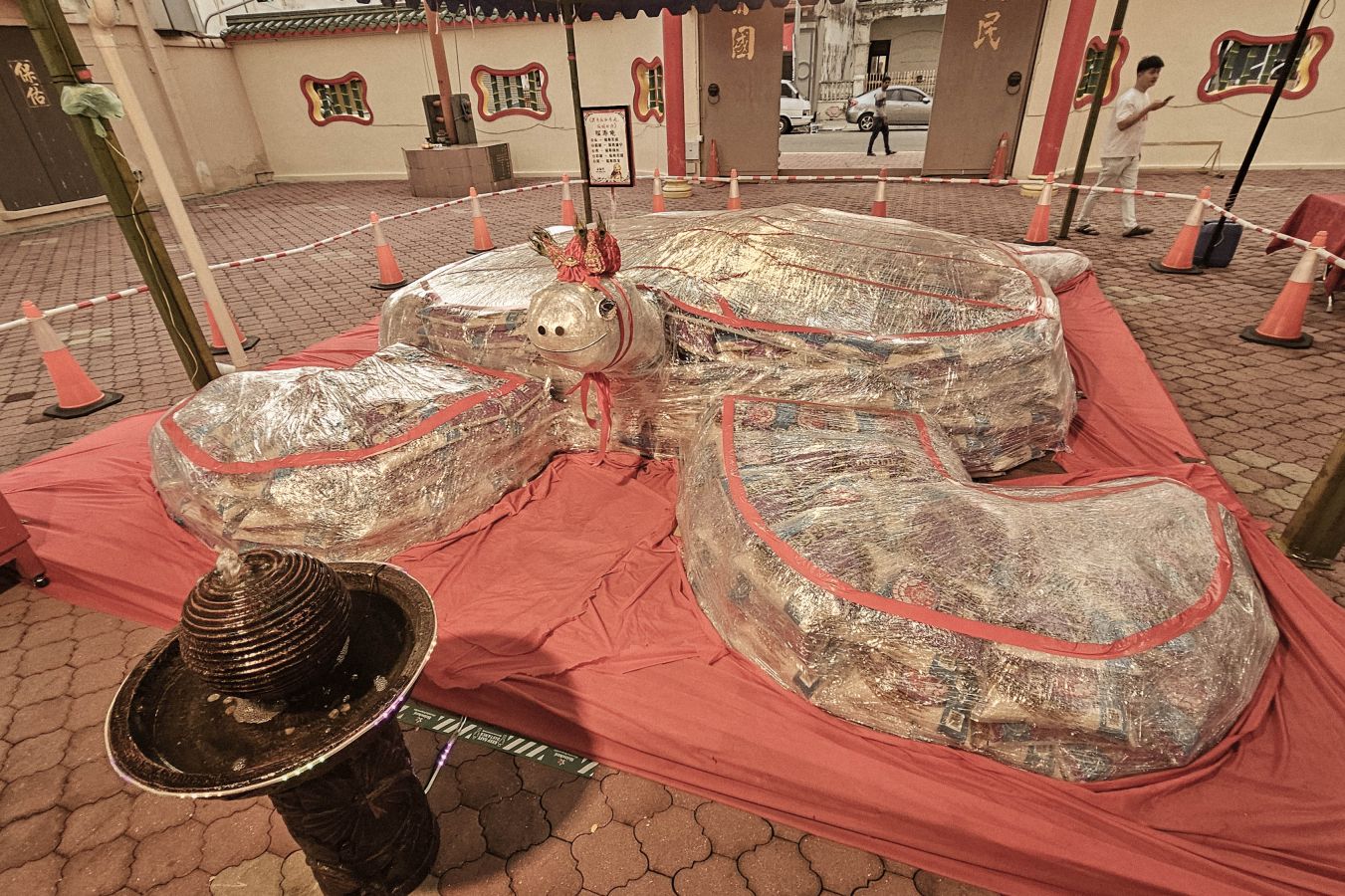
“Qi Gui” — literally translated as Begging Turtle.
Perpetuating a thousand-year tradition of Southern Fujian in China, POK Temple has transformed the “Hundred Families Rice” donation into a compassionate and inclusive charitable practice.
【The Auspicious Turtle – A Mandate from the Ancestral Temple】
Since ancient times, the turtle has been revered as a supreme symbol of auspiciousness, longevity, and divine spiritual energy. As recorded in the Book of Rites: “The Qilin, Phoenix, Turtle, and Dragon are known as the Four Sacred Beings.” Among them, the Qilin, Phoenix, and Dragon belong to mythological legends; only the turtle truly walks the earthly realm, carrying humanity’s collective prayers for boundless longevity and peace.
On June 1, 2017, the temple committee acted upon the divine decree of the main deity, San Ping Chu So-kong (Master Sanping). They journeyed to the ancient, thousand-year-old Sanping Temple in Zhangzhou, Fujian, respectfully requested the sacred incense of the Patriarch and his Dharma guardians, and brought them to POK Temple Malacca. During a planchette session through spirit writing, the Patriarch decreed that the temple should initiate the ritual of Qi Gui (Begging the Sacred Turtle), allowing devotees to “touch the turtle for enhanced fortune.” At the time, local devotees and Taoist priests alike were unfamiliar with this phrase. Only after extensive research into ancient scriptures was this long-forgotten Minnan (Hokkien) custom rediscovered.
【What is Qi Gui · A Traditional Legacy】
Qi Gui is a distinctive Lunar New Year and Lantern Festival folk custom deeply rooted in Quanzhou, Fujian, and the Penghu region of Taiwan. The veneration of the sacred turtle has existed in Hokkien culture for centuries. Originating in Quanzhou, it was carried across the seas to Penghu in the 18th century.
The “turtle” begged from the temple is actually a grand sculpture constructed entirely from sacks of rice or traditional cakes, known as the “Rice Turtle” or Gui Guo. Devotees communicate with the deities through divination blocks (Jiaobei) to ask permission to bring a portion of the turtle home, securing blessings of peace and progeny. Upon the fulfillment of their wishes or success in business the following year, devotees return to the temple with a larger, heavier rice turtle to pass on the divine blessings to the next seeker.
【Universal Compassion – Transforming Self-Blessing into Altruism】
At POK Temple, the “Begging Turtle” ritual follows ancient rites but also embodies the compassion and wisdom of the Patriarch. The Patriarch instructed: “Gather rice from a hundred households to bestow blessings for a hundred families.”
POK Temple elevated the traditional act of praying for one’s own safety into a broader mission of social assistance — providing rice relief to poor households, orphanages, and vulnerable groups. Those who give rice gain immeasurable merit, while recipients receive peace and blessings. This pioneering initiative truly reflects Master Sanping’s founding mission: “To widely benefit all beings.”
【Awakening the Auspicious Entity】
On the first day of the sixth lunar month each year, Poh Onn Kong Temple holds a solemn “Eye-Opening Ceremony” for the rice turtle, marking the official start of the Begging Turtle festival. Once its eyes are dotted, the rice turtle is believed to awaken, imbued with heavenly energy to bless those who touch it. Among the people, a lively verse is recited:
“Touch the head for rising fortune,
Touch the feet for steady progress,
Touch the shell for longevity,
Like a fish in water, all wishes fulfilled.”
【A Malaysian First · Spreading Bonds of Compassion】
The inaugural festival created a sensation within just two weeks, drawing more than 3,000 devotees from across Malaysia, East Malaysia, China, Hong Kong, and Indonesia, who donated over 10,000 catties of rice. Temple volunteers worked in seclusion for a week to construct the giant rice turtle — a pioneering achievement in Malacca, and believed to be Malaysia’s very first charitable rice turtle of such scale.
That year, over 5,000 devotees came to “touch the turtle,” and on the sixth day of the lunar month, the Patriarch’s birthday, more than 1,000 gathered to receive blessed rice. After the festival, all 10,000 catties of rice were distributed to orphanages, disability centers, nursing homes, and charitable institutions. With a wisp of incense and ten thousand bags of rice, Poh Onn Kong Temple invigorated this ancient folk custom, radiating the light of modern compassion along the banks of the Malacca River.